GST Registered Does Not Always Mean Trade-Safe: What Businesses Should Check


Seeing an active GSTIN can give a business owner a sense of confidence.
A new buyer sends an enquiry. The company appears legitimate. It has a GST number, a registered business name and perhaps even a professional-looking website. The order value is attractive, and the buyer wants 30 or 60 days of credit.
Everything seems normal.
But does GST registration tell you whether that buyer usually pays suppliers on time?
Does it tell you whether previous vendors have faced payment delays, quantity disputes, delivery disagreements or communication problems?
No.
GST registration is an important part of business verification in India, but it is only one part of a much larger due-diligence process.
This is why GST registered business verification should be treated as the beginning of a trade check – not the final decision.
Before extending credit, dispatching a large order or entering a long-term business relationship, companies need to understand both who the business is and, where reliable information is available, how that business has behaved in previous trade relationships.
What Does GST Registration Actually Tell You?
A GSTIN is a unique identification number issued to businesses registered under India’s Goods and Services Tax system.
Using the official GST Portal’s taxpayer search facility, businesses can verify information including the legal name, trade name, jurisdiction, registration date, constitution of business, taxpayer type, GSTIN status, cancellation information, nature of business activities and certain return-filing details.
That makes GST verification extremely valuable.
- Does this GSTIN actually exist?
- Is the GST registration active?
- What is the legal name of the business?
- What is the legal name of the business?
- Does the trade name match the company approaching you?
- When was the GST registration obtained?
- What type of business is registered?
- What activities does the business report?
- Has the registration been cancelled?
- These are important identity and compliance checks.
These are important identity and compliance checks.
But none of them directly answers the question many sellers actually want answered:
That requires a different layer of verification.
GST Registration Is Not the Same as Trade Reliability
Consider two companies.
Both have active GST registrations. Both have valid GSTINs. Both operate from registered addresses. Both may file GST returns.
But Business A may regularly pay suppliers within agreed terms, communicate clearly when a problem arises and resolve genuine disputes promptly.
Business B may repeatedly delay payments, change commitments after delivery or become difficult to contact when an invoice becomes overdue.
From a GST-registration perspective, both businesses may still appear legitimate. From a supplier’s perspective, however, the risk can be very different.
This distinction is fundamental to proper GST registered business verification.
GST registration helps confirm identity and tax registration. It should not be treated as a guarantee of payment behaviour, commercial reliability or future performance.
What GST Verification Does Not Tell You
1. Whether the Buyer Pays on Time
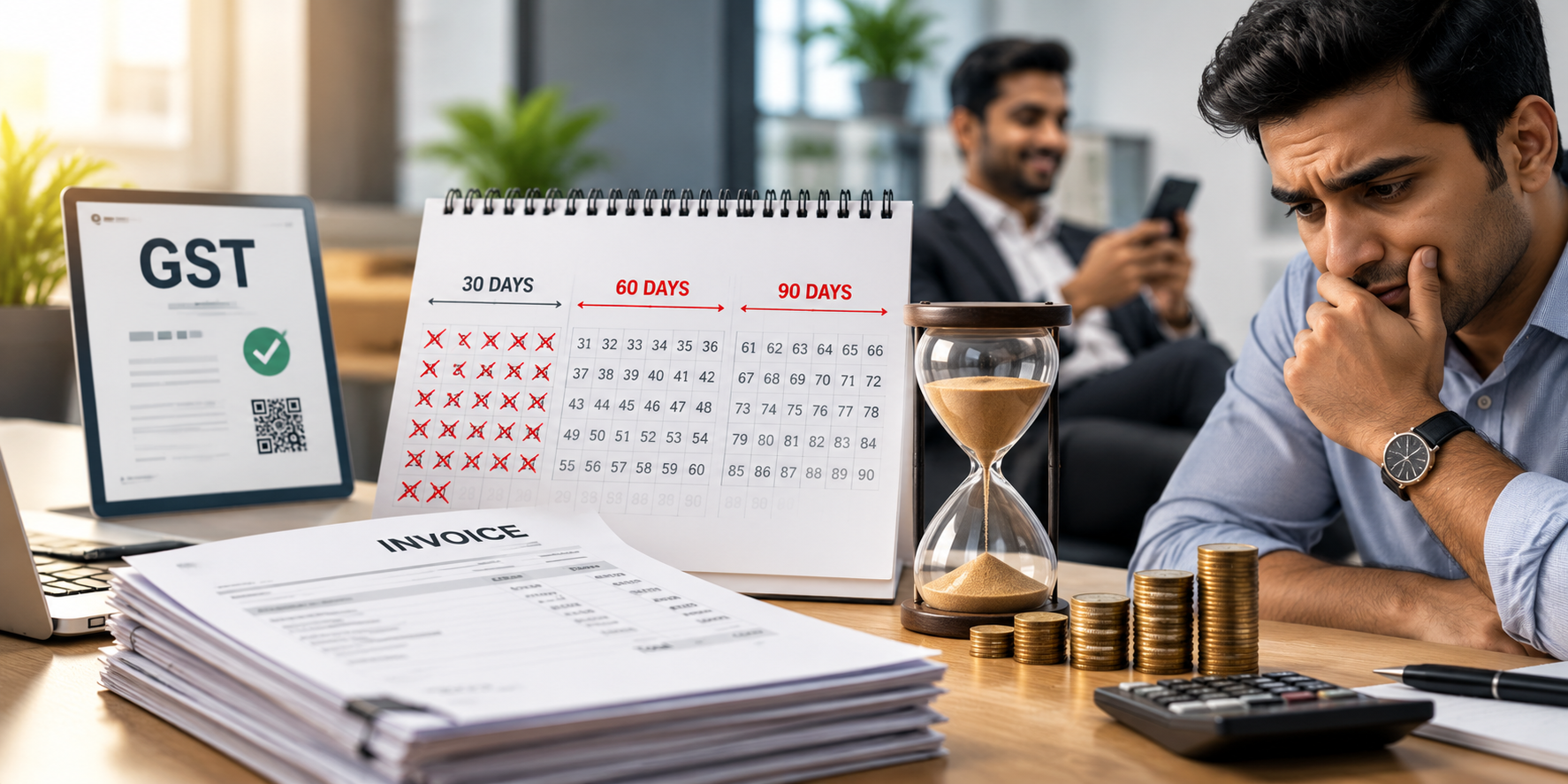
A buyer may be properly registered under GST and still take significantly longer than the agreed credit period to settle invoices.
If your terms are 30 days and payment regularly arrives after 60 or 90 days, your cash flow is affected regardless of whether the buyer’s GSTIN is valid.
That is why payment behaviour should be considered separately from GST status.
2. Whether Previous Suppliers Have Faced Non-Payment
GST registration does not function as a trade-experience database.
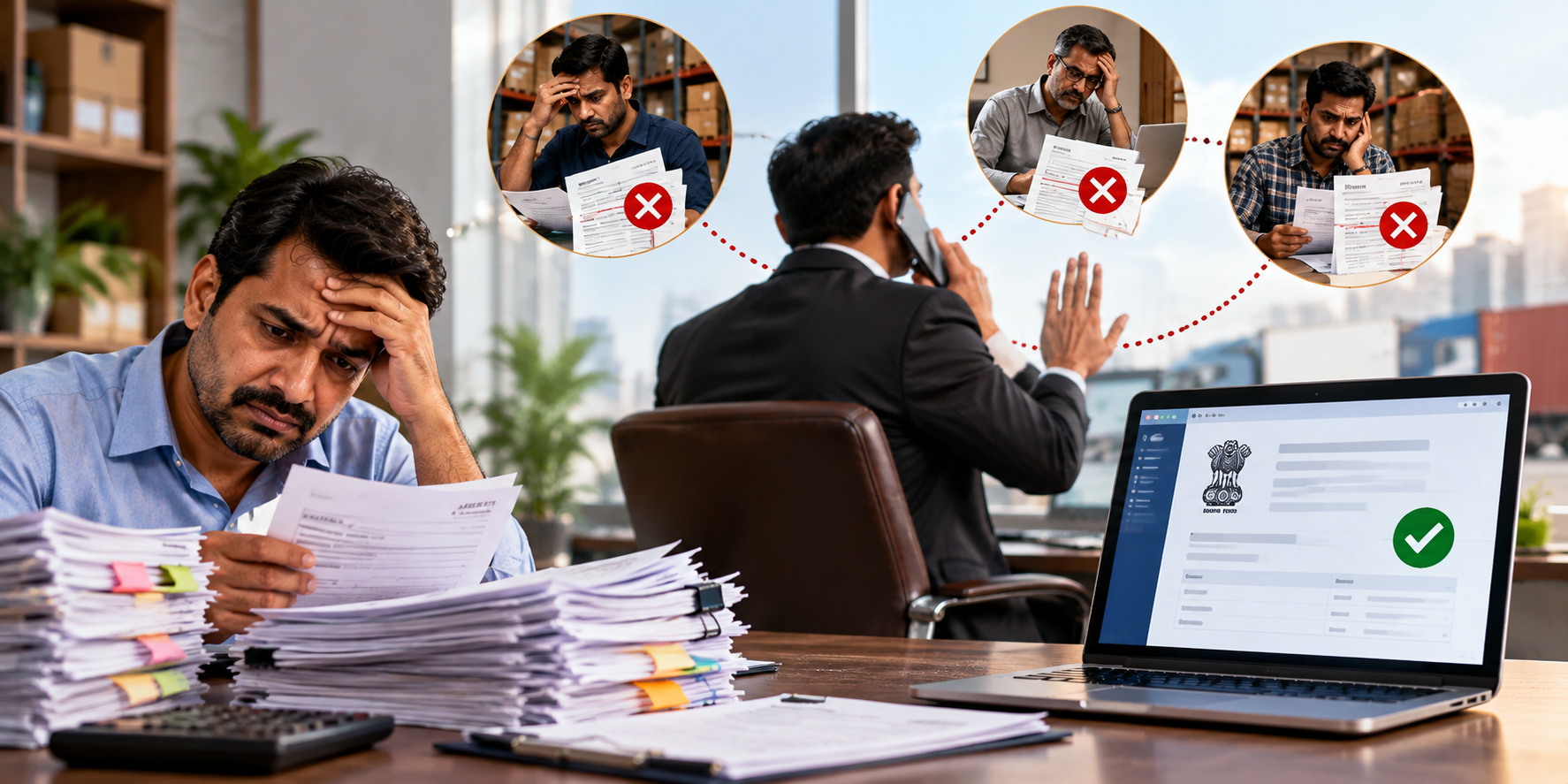
It does not, by itself, tell you whether another supplier has had an unpaid invoice, partial-payment issue or prolonged payment dispute with the business.
3. Whether the Business Honours Commercial Commitments
Many B2B disagreements have nothing to do with tax registration.
• promised payment dates
• pricing commitments
• delivery schedules
• purchase-order conditions
• minimum quantities
• product specifications
• agreed credit terms
A GSTIN does not tell you how consistently a business honours these commitments.


4. Whether Communication Is Reliable
Sometimes the biggest warning sign appears after the invoice becomes due.
Calls stop being answered. Emails receive vague responses. Payment dates keep changing. Accounts
personnel become difficult to reach.
GST registration cannot tell you how effectively a company communicates during an actual transaction.
5. Whether There Have Been Quality or Quantity Disputes
Trade risk is not limited to buyers failing to pay. Buyers also need to assess suppliers.
A supplier may have a valid GST registration but could still have a history of delivery delays, quality
issues, quantity discrepancies, transportation problems or poor after-sales support.
That is why due diligence matters on both sides of a transaction.

What Should You Check Before Trading With a GST-Registered Business?
A more practical verification process combines formal business identity checks with commercial due
diligence.
Here are some of the most important areas to review.
1. Verify the GSTIN on the Official GST Portal
Never rely only on a GST number printed on a quotation, invoice, visiting card or WhatsApp message
Search the GSTIN independently.
The official GST system allows users to verify taxpayer information and GSTIN status, helping
businesses identify invalid or fraudulent GST numbers.
• the GSTIN is active
• the legal name matches
• the trade name is consistent
• the business constitution makes sense
• the registered business activities align with the transaction
• the registration date looks reasonable in the context of the proposed order
A mismatch does not automatically prove wrongdoing, but it should trigger additional verification.
2. Match the Business Name and Address
Suppose the GST registration shows one business name and location, but the quotation comes from another name or goods are requested at a completely different address.
There may be a legitimate explanation. Businesses can have additional places of business, warehouses or branches. But you should still ask questions.
• legal business name
• trade name
• billing address
• delivery address
• registered office
• warehouse or factory location, where relevant
The goal is not to reject every mismatch. The goal is to understand it before money or goods are at risk.
3. Check How Long the Business Has Been Registered
A newly registered company is not automatically risky. Every established business was new once.
However, a newly registered entity placing an unusually large first order and simultaneously asking for long credit terms deserves more scrutiny.
For example: a company registered recently places a Rs 10 lakh order, asks for immediate dispatch, wants 60 days of credit, resists an advance payment and provides no meaningful trade references.
Each factor may have an innocent explanation, but together they create a situation where deeper verification makes sense.
4. Ask for Trade References
One of the oldest forms of B2B due diligence remains useful.
Ask the buyer or supplier for references from companies they have recently traded with.
• How long have you traded with them?
• Are invoices usually settled within agreed terms?
• Are disputes handled professionally?
• Does the business communicate clearly?
• Have you experienced frequent delivery or quality issues?
Trade references are not perfect because companies naturally tend to provide favourable references.
Still, they add another layer of context.
5. Review Available Trade Experiences
This is the point where identity verification and trade behaviour become different.
TEI – Trade Experience Insights – is designed to provide businesses with additional trade context by allowing users to search businesses by GSTIN and review moderated trade experiences submitted by verified contributors.
TEI organises experiences into specific categories including payment delay, non payment, partial payment, delivery delay, quality issues, quantity disputes, transportation issues, poor communication, commitment breaches, invoice/documentation issues, customer service and warranty or after-sales support. Contributor identity is protected by default.
The idea is not to replace GST verification. It is to complement it.
GST verification → Business identity verification →
Trade-experience review → Commercial decision
This gives decision-makers more context than a GST status check alone.
6. Be Careful With the First Credit Order
One of the most common business risks appears when a new customer immediately asks for unsecured credit.
“Sir, first order hai, but future mein bahut business denge.”
That may be completely genuine. But future business should not be the only basis for current credit
exposure.
• partial advance
• smaller initial order
• lower credit limit
• shorter payment terms
• phased dispatch
Credit can increase as the trading relationship develops.
7. Use a Proper Purchase Order
Informal communication is common in Indian business. WhatsApp is useful. Phone calls are useful. But important commercial terms should not exist only in conversations.
• buyer and seller
• products or services
• quantity
• price
• taxes
• delivery location
• delivery timeline
• quality specifications
• credit period
• payment due date
• acceptance conditions
• other mutually agreed terms
Clear documentation reduces ambiguity later.
8. Keep Proof of Delivery and Acceptance
A transaction does not end when goods leave your warehouse.
• invoice
• purchase order
• e-way bill where applicable
• transporter information
• delivery acknowledgement
• proof of delivery
• inspection or acceptance documentation where relevant
• email communication
• agreed payment terms
If a dispute arises months later, accurate records become far more useful than memory.
9. Set a Credit Limit Before Dispatch
Many businesses determine credit exposure emotionally.
A large buyer asks for Rs 8 lakh of credit, and the seller approves it because the order looks attractive.
A better approach is to establish internal credit rules.
• How much can we afford to have outstanding?
• Is this the first transaction?
• What documentation has been completed?
• What trade references are available?
• What does the available trade record show?
• Should part of the order be prepaid?
• What is our maximum exposure to a new buyer?
Good sales should strengthen cash flow – not create uncontrolled receivables.
10. Separate 'Business Exists' From 'Business Is Suitable for This Transaction'
This is perhaps the most important lesson.
A valid GST registration can help establish: “This is an identifiable registered business.”
It does not automatically establish: “We should give this business Rs 10 lakh of unsecured 60-day
credit.”
Those are two very different conclusions.
Good B2B due diligence builds the second decision using several pieces of information rather than one
signal.
A Simple GST Registered Business Verification Checklist
Before accepting a new buyer or supplier, consider checking:
1. GSTIN authenticity and status
2. Legal and trade name
3. Registration date
4. Registered and operating address
5. PAN-linked identity where appropriate
6. Business activity
7. Trade references
8. Available trade-experience information
9. Purchase Order and documentation
10. Credit limit
11. Advance-payment requirement
12. Written payment terms
13. Delivery and acceptance proof
14. Internal approval for large credit exposure
No single check can eliminate business risk. The objective is to make a better-informed decision

Final Thoughts
GST registration matters. Businesses should verify it.
But an active GSTIN should never become the only reason for extending substantial credit ordispatching a high-value order to a new customer.
Effective GST registered business verification means looking beyond whether a GST number exists.
Check the identity. Check the address. Understand the business. Document the transaction. Set sensible credit exposure. Ask for references.
And where reliable trade-experience information is available, review it before making the final decision.
A few additional checks before dispatch can be far less expensive than months of payment follow-ups afterward.
Frequently Asked Questions
Is a GST-registered business automatically trustworthy?
No. GST registration establishes tax registration and provides useful business-identification information, but it does not guarantee that the business will pay on time, honour every commercial commitment or perform a future transaction successfully.
How can I verify whether a GSTIN is genuine?
You can use the official GST Portal’s Search Taxpayer functionality to verify GSTIN details including legal name, trade name, registration information, GSTIN status and other taxpayer information.
What should I check before giving credit to a new buyer?
Check the GSTIN, business identity, address, registration history, trade references, available trade experiences, credit limit, advance requirement, Purchase Order, written payment terms and delivery documentation.
Does GST verification show whether a customer pays suppliers on time?
GST verification is primarily an identity, registration and tax-related check. It should not be treated as a record of a company’s payment behaviour with suppliers.
What is the difference between GST verification and trade-experience verification?
GST verification helps confirm business registration and identity details. Trade-experience verification provides additional context about actual commercial experiences such as payment, delivery, quality, communication and documentation issues.
Can TEI replace normal business due diligence?
No. TEI should be used as an additional information source within a broader due-diligence process. Businesses should still review GST details, documentation, commercial terms, credit exposure and other relevant information before making a trade decision.