How to Verify a Buyer Before Giving Credit in India
Extending credit is a normal part of doing business in India. Manufacturers, wholesalers, distributors, service providers, exporters, and B2B suppliers often allow customers to purchase goods or services today and make payment after 15, 30, 45, or even 90 days.
Credit can help businesses win larger orders and build stronger customer relationships. However, it also creates financial risk.

A buyer may have a registered company, an active GSTIN, an impressive website, and a professional office, but none of these automatically guarantee that payment will arrive on time.
That is why understanding how to verify buyer before giving credit is an important part of responsible business decision-making.
The purpose of buyer verification is not to eliminate every possible risk. No verification process can guarantee payment. The objective is to collect enough information to make a better-informed decision before exposing your business to significant credit risk.
Why Buyer Verification Matters Before Offering Credit



When a supplier provides goods on credit, the supplier is effectively financing the buyer for a certain period.
For example, imagine you supply goods worth Rs. 5 lakh with 45-day payment terms. Until the buyer pays, Rs. 5 lakh of your working capital remains blocked.
If the buyer delays payment for another 60 or 90 days, your business may still need to pay employees, suppliers, GST liabilities, transport costs, rent, loan installments, and other expenses.
This is why learning how to verify buyer before giving credit is not simply an administrative exercise. It is part of protecting your company’s cash flow.
A proper verification process can help you identify warning signs before approving a large credit limit.
1. Verify the Buyer's GSTIN
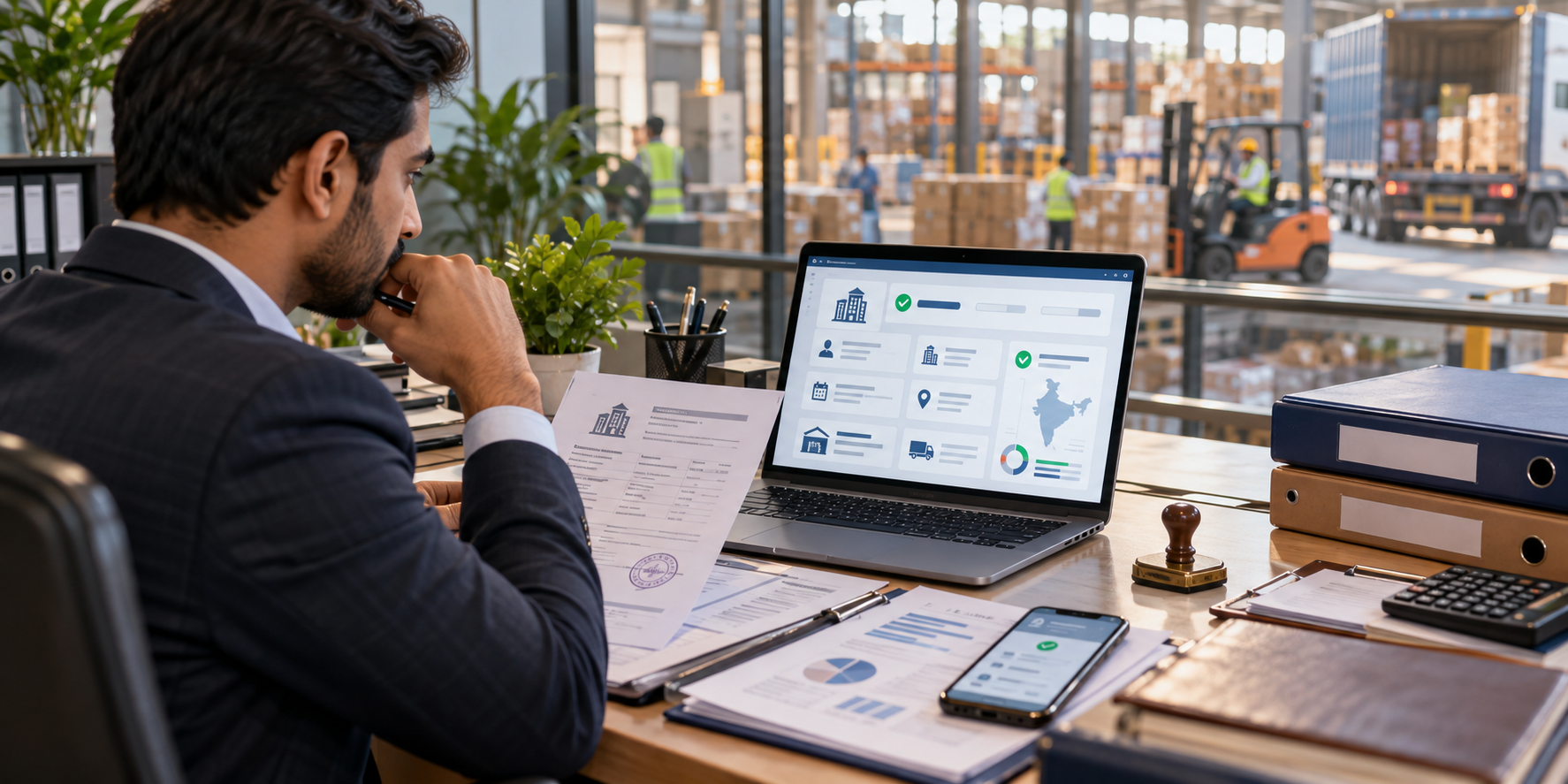
One of the first steps in how to verify buyer before giving credit is checking the buyer’s GST registration.
Ask the buyer to provide their GSTIN and verify the available registration details through the official GST system.
• Legal business name
• Trade name
• GST registration status
• Registration date
• Principal place of business
• Type of taxpayer
• Nature of business activities
2. Check the Legal Identity of the Business
The next step is to understand exactly who you are dealing with.
A business may operate as a proprietorship, partnership firm, LLP, private limited company, public limited company, or another registered business entity.
Ask for appropriate business documentation depending on the nature of the organization.
For companies and LLPs, available corporate registration details may help confirm that the entity exists and identify important information associated with the business.
When researching how to verify buyer before giving credit, always make sure the entity placing the order is the same entity that will receive the invoice and be legally responsible for payment.
Differences between company names, GST details, billing names, bank account names, and purchase orders should be clarified before supplying goods.
3. Confirm the Business Address
Address verification is another useful step.
Compare the address shown on GST registration, purchase orders, the company website, invoice communication, business directories, and official company documents.
If possible, verify whether the business is actually operating from the address it provides.
For high-value credit transactions, some companies may also conduct a physical verification of the
buyer’s office, warehouse, factory, or shop.
A legitimate business can certainly change offices or operate from multiple locations, so an address difference is not automatically suspicious. However, unexplained inconsistencies deserve further clarification.
4. Check How Long the Business Has Been Operating
Business history can provide useful context when deciding whether to offer credit.
A company that has operated for several years may have more information available for verification than a newly established business.
Check incorporation or registration date, GST registration date, website history, industry presence, trading activity, and customer or supplier references.
However, avoid assuming that an older company is automatically low-risk or that a new company is
automatically high-risk.
Business age should be evaluated together with other information when deciding how to verify buyer before giving credit.
5. Ask for Trade References
Trade references can be especially useful in B2B transactions.
Ask the buyer to provide details of two or three existing suppliers with whom they already conduct business on credit.
Where appropriate, ask how long they have supplied the buyer, whether agreed payment terms are normally followed, whether delays are frequent, what approximate credit exposure has been maintained, and whether unresolved commercial disputes exist.
Trade references should not be treated as absolute proof because buyers may naturally provide references from suppliers with whom they have good relationships. Even so, they can provide an additional layer of information.
6. Review Available Trade Experience
Understanding a buyer’s past trading behaviour may help suppliers make more informed decisions.
Where legally and commercially appropriate, businesses can review available trade-experience information relating to payment behaviour, delivery disputes, quality disputes, communication issues, transaction experience, and commercial reliability.
When evaluating how to verify buyer before giving credit, trade history can provide useful context beyond basic registration information.
A business can have a valid GST registration while still experiencing commercial disagreements, delayed payments, or other transaction-related issues. For that reason, registration verification and trade-experience verification serve different purposes.
7. Verify Bank Details Carefully
Payment fraud and account manipulation are risks that businesses should take seriously.
Before beginning a significant commercial relationship, confirm that the bank details provided belong to the correct business.
Check whether the account name corresponds with the legal or trading entity you are dealing with.
If bank details suddenly change during an ongoing transaction, verify the change through an independently confirmed communication channel before sending or requesting payments.
This is particularly important when dealing with large-value orders.
8. Start With a Smaller Credit Limit
You do not always need to approve a large credit facility immediately.
One practical approach to how to verify buyer before giving credit is to begin the relationship with controlled exposure.
For example, you could initially offer advance payment, partial advance payment, a smaller order value, shorter payment terms, or limited credit exposure.
If the buyer consistently follows the agreed terms over several transactions, the credit limit can be reviewed later.
This allows trust to develop through actual business experience rather than assumptions.
9. Define Payment Terms Clearly
Many payment disputes occur because commercial terms were never properly documented.
Before delivering goods or services, clearly mention invoice amount, payment due date, credit period, payment method, delivery conditions, taxes, late-payment provisions where applicable, acceptance terms, return or rejection policy, and dispute-resolution process.
Whenever possible, obtain written confirmation of these terms.
Understanding how to verify buyer before giving credit is important, but even a verified buyer should receive clearly documented commercial terms.
Clear documentation protects both parties and reduces misunderstandings.
10. Confirm the Purchase Order
For larger B2B transactions, avoid relying only on verbal discussions or informal messages.
Request a formal purchase order containing the buyer’s legal name, GSTIN, billing address, delivery address, product or service details, quantity, price, payment terms, authorized contact, and purchase order number.
Check whether the purchase order matches the agreement made by your sales team.
Unexpected changes in quantity, delivery location, payment terms, or company identity should be investigated before dispatch.
A Practical Buyer Verification Checklist
If you are trying to understand how to verify buyer before giving credit, the following checklist can provide a useful starting framework:
- Verify GSTIN authenticity and status.
- Confirm legal and trade name.
- Check business registration details.
- Verify registered and operating addresses.
- Understand how long the business has been operating.
- Check the nature of business activities.
- Collect trade references.
- Review available trade-experience information.
- Verify purchase orders.
- Confirm bank information.
- Decide an appropriate credit limit.
- Consider advance or partial advance payment.
- Document payment terms.
- Maintain delivery and acceptance proof.
- Review payment performance before increasing credit.
Buyer Verification Should Be an Ongoing Process
A common mistake businesses make is verifying a customer only before the first transaction. Commercial circumstances can change.
A buyer who paid regularly for two years may later face financial pressure, operational disruption, management changes, or cash-flow problems.
For this reason, businesses should periodically review outstanding invoices, average payment delay, credit utilization, order-value growth, disputes, communication patterns, changes in business details, and available trade information.
Knowing how to verify buyer before giving credit is therefore not just about onboarding a new customer. It is also about monitoring existing credit relationships responsibly.

Final Thoughts
Offering credit can help businesses grow, strengthen customer relationships, and compete effectively in B2B markets. However, credit should be supported by proper verification and sensible exposure limits.
The best approach to how to verify buyer before giving credit is to combine multiple checks rather than depending on a single document.
Verify the buyer’s GST details, confirm the legal entity, review business information, ask for trade references, examine available trade experience, document payment terms, and begin with a credit level
that your business can comfortably manage.
Most importantly, remember that verification does not guarantee payment. It simply helps businesses make decisions using better information.
If you regularly sell goods or services on credit, developing a structured system for how to verify buyer before giving credit can improve credit discipline, protect working capital, and help your team make more informed commercial decisions.

Pingback: Payment Delay in B2B Trade: 6 Key MSME Cash Flow Risks | TEI